
133 miles per hour (mph) is equal to approximately 214.04 kilometers per hour (kmh). Knowing this conversion can be really handy, especially if you’re into cars or watch a lot of international motorsports. This article will not only give you the answer but also break down the simple math behind it.
You’ll leave here knowing exactly how to convert any mph value to kmh in seconds. Let’s get started with a clear, no-fluff guide that respects your time and gets straight to the point.
The Step-by-Step Formula for MPH to KMH Conversion
Let’s get straight to it. The core conversion factor is 1 mile equals 1.60934 kilometers. This number is the key to all conversions.
The formula is simple: Kilometers per Hour = Miles per Hour × 1.60934.
Now, let’s walk through the calculation for 133 mph. It’s just a matter of multiplying 133 by 1.60934.
So, 133 * 1.60934 = 214.04222 km/h.
For practical use, you can round this number. Rounding to 214 or 214.04 km/h is usually sufficient.
If you need a quick estimate, here’s a mental math shortcut. Multiply the mph by 1.6. For example, 60 mph * 1.60934 = 96.56 km/h.
This method gives you a close enough figure for most everyday situations.
Why Are There Two Different Ways to Measure Speed?
Ever wondered why there are two different ways to measure speed? Let’s get into it.
Miles per hour (mph) is part of the Imperial system, mainly used in the United States, the United Kingdom, and a few other countries.
Kilometers per hour (kmh) is part of the Metric system, which most of the world uses.
This difference means car speedometers in the US look different from those in Canada or Europe.
Imagine driving in Europe and seeing 130 kmh on your speedometer. That’s about 81 mph. It can be confusing if you’re not used to it.
The Imperial system has older origins, while the Metric system was designed for scientific and universal standardization.
Neither system is ‘better.’ They just serve different regions and purposes.
Knowing how to convert between them is essential for international travel, science, and engineering. 133 mph to kmh
Think of it like learning a couple of key phrases in another language to help you navigate a new place.
Understanding both systems can make your travels smoother and your work more precise.
Putting 133 MPH into Real-World Context
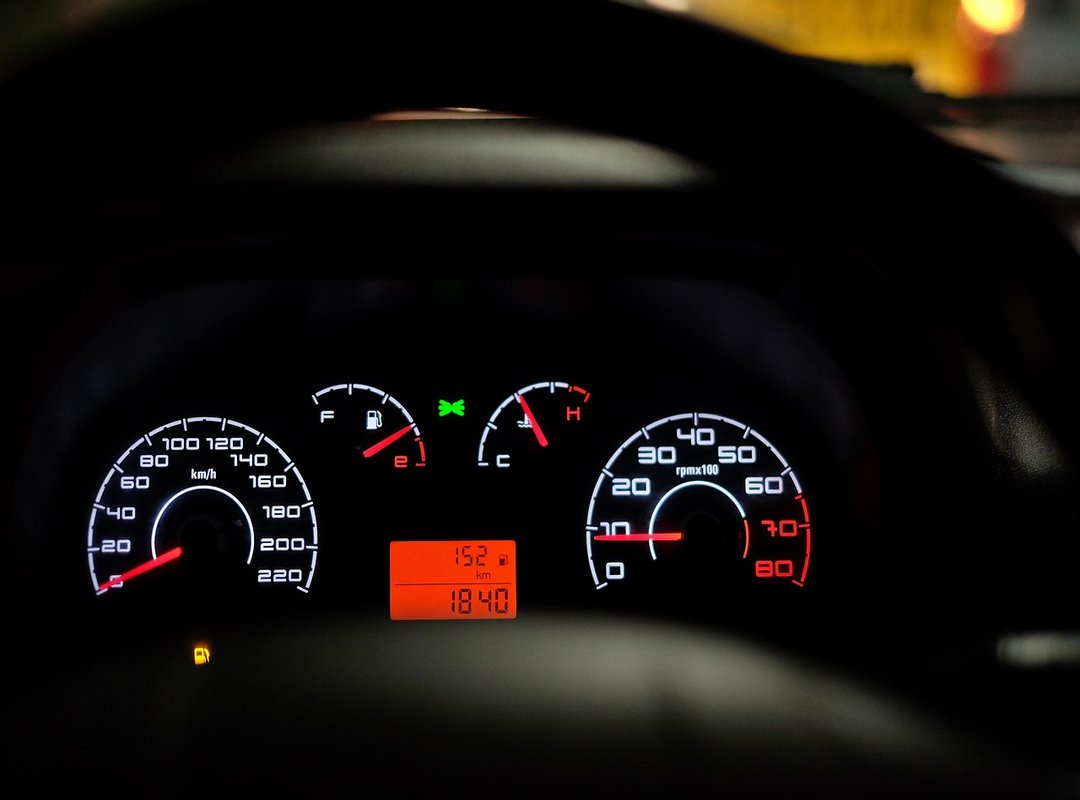
Imagine this: 133 mph (214 kmh) is the take-off speed of some smaller passenger jets. That’s right, the same speed at which a plane lifts off the ground and heads for the sky.
Now, let’s bring it down to earth. On many US interstates, the typical speed limit is around 70 mph. So, 133 mph is nearly double that.
Can you imagine driving that fast on a highway? It’s not just fast; it’s incredibly dangerous.
In the world of motorsports, 133 mph is a common speed on the straightaways of professional racing circuits. These drivers are trained to handle such speeds, but for the average person, it’s a whole different ball game.
Let’s compare it to the animal kingdom. The cheetah, known as the fastest land animal, can reach speeds of around 70 mph. At 133 mph, you’re moving almost twice as fast as a cheetah in full sprint.
Understanding these comparisons helps you grasp the sheer magnitude of 133 mph. It’s not just a number; it’s a speed that’s both thrilling and, in many contexts, beyond our everyday experience.
Quick Reference: Common Speed Conversions
When you’re traveling or just curious, it’s handy to know how to convert speeds between miles per hour (MPH) and kilometers per hour (KMH). Here’s a quick cheat sheet you can bookmark for future use.
25 MPH = 40.2 KMH
50 MPH = 80.4 KMH
55 MPH = 88.5 KMH
65 MPH = 104.6 KMH
75 MPH = 120.7 KMH
100 MPH = 160.9 KMH
These conversions are based on the standard formula: 1 MPH = 1.60934 KMH. It’s simple but essential when you need to make quick calculations.
For those who like to go fast, 133 mph to kmh is 214.0 KMH.
This list covers the most common speed limits and round numbers, making it easy to reference in a pinch.
You’re Now an Expert at Speed Conversions
Converting 133 mph to kmh is a straightforward process. Restated, 133 mph is approximately 214.04 kmh. The simple formula you learned is: MPH x 1.60934 = KMH.
You now have the tool and knowledge to handle any speed conversion you encounter. A simple piece of math can make navigating our global world a little bit easier.
 Ask Peggy Bixlerope how they got into health and wellness for children and you'll probably get a longer answer than you expected. The short version: Peggy started doing it, got genuinely hooked, and at some point realized they had accumulated enough hard-won knowledge that it would be a waste not to share it. So they started writing.
What makes Peggy worth reading is that they skips the obvious stuff. Nobody needs another surface-level take on Health and Wellness for Children, Family Bonding Ideas, Child Development Insights. What readers actually want is the nuance — the part that only becomes clear after you've made a few mistakes and figured out why. That's the territory Peggy operates in. The writing is direct, occasionally blunt, and always built around what's actually true rather than what sounds good in an article. They has little patience for filler, which means they's pieces tend to be denser with real information than the average post on the same subject.
Peggy doesn't write to impress anyone. They writes because they has things to say that they genuinely thinks people should hear. That motivation — basic as it sounds — produces something noticeably different from content written for clicks or word count. Readers pick up on it. The comments on Peggy's work tend to reflect that.
Ask Peggy Bixlerope how they got into health and wellness for children and you'll probably get a longer answer than you expected. The short version: Peggy started doing it, got genuinely hooked, and at some point realized they had accumulated enough hard-won knowledge that it would be a waste not to share it. So they started writing.
What makes Peggy worth reading is that they skips the obvious stuff. Nobody needs another surface-level take on Health and Wellness for Children, Family Bonding Ideas, Child Development Insights. What readers actually want is the nuance — the part that only becomes clear after you've made a few mistakes and figured out why. That's the territory Peggy operates in. The writing is direct, occasionally blunt, and always built around what's actually true rather than what sounds good in an article. They has little patience for filler, which means they's pieces tend to be denser with real information than the average post on the same subject.
Peggy doesn't write to impress anyone. They writes because they has things to say that they genuinely thinks people should hear. That motivation — basic as it sounds — produces something noticeably different from content written for clicks or word count. Readers pick up on it. The comments on Peggy's work tend to reflect that.